If you have ever been told you are a sickle cell carrier, you may have wondered whether that means you have sickle cell disease. The short answer is no; being a carrier is not the same as having the disease.
But the difference matters enormously for your health, your relationships, and the children you may have one day. In Ghana, where 20 to 30 percent of the population carry the sickle cell trait, understanding this distinction is not academic. It is personal.
This guide explains the genetic difference between carrying one sickle gene (AS genotype) and inheriting two (SS genotype), what each means for daily life, and why every Ghanaian should know their genotype before starting a family.
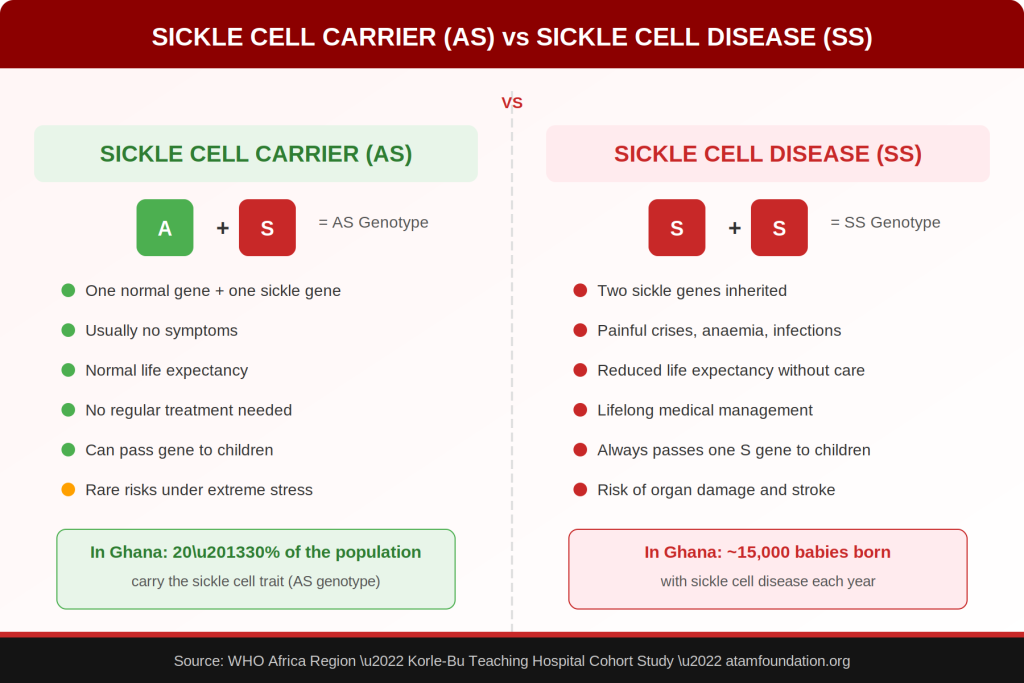
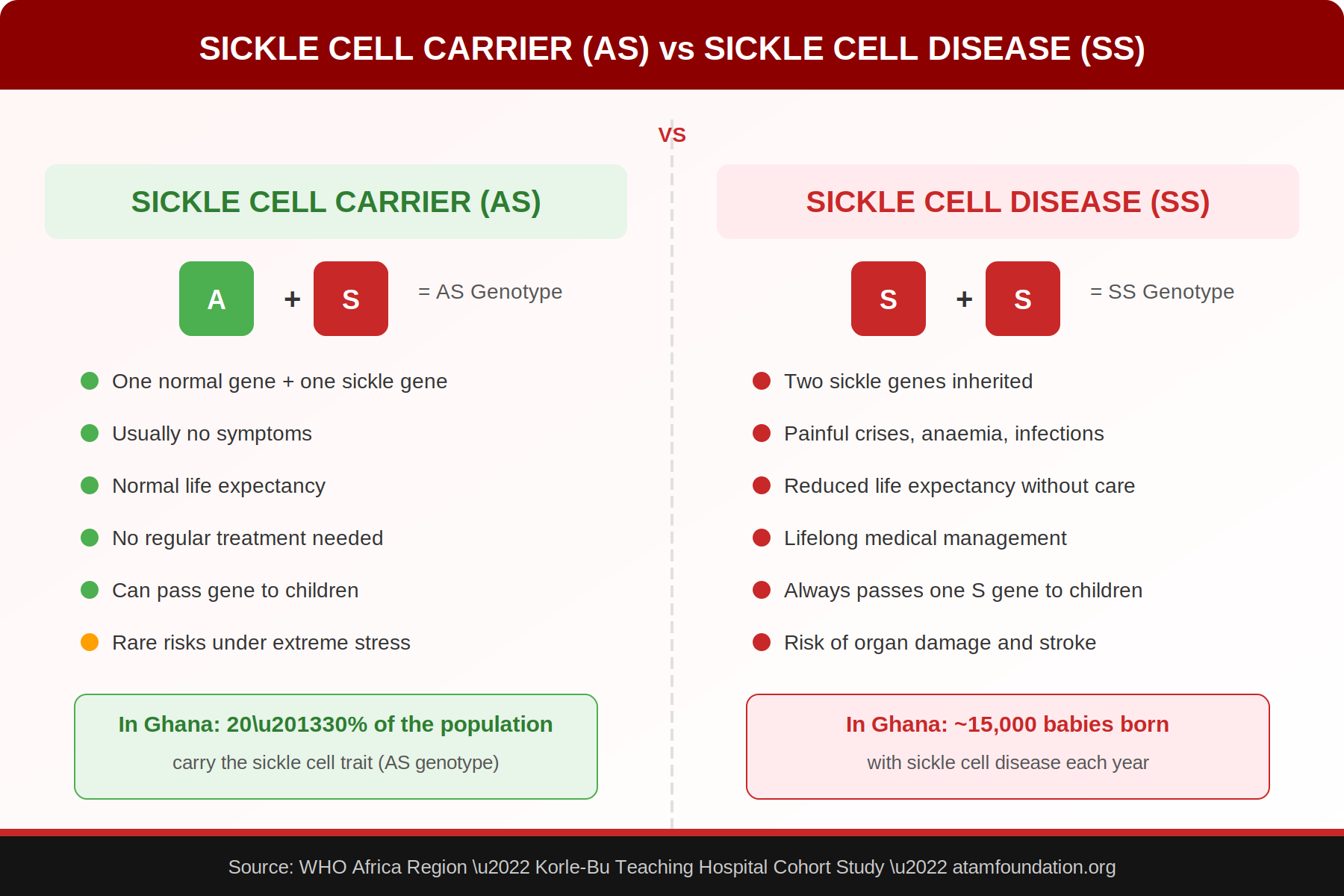
Sickle cell carrier (AS) vs sickle cell disease (SS) — a side-by-side comparison. Source: WHO Africa Region, Korle-Bu Teaching Hospital.
What Is a Sickle Cell Carrier?
A sickle cell carrier — also called having the sickle cell trait — means you inherited one normal haemoglobin gene (A) and one sickle haemoglobin gene (S). Your genotype is AS.
Your body makes enough normal haemoglobin to keep red blood cells functioning properly most of the time. Carriers typically experience no symptoms, live normal lifespans, and need no regular treatment for their trait status.
However, the word “carrier” exists for a reason: you carry the sickle cell gene in your DNA and can pass it to your children. This is why genotype testing before marriage or pregnancy is so important, and why we cover this in depth in our genotype guide and compatibility chart.
Can Carriers Ever Have Symptoms?
In rare situations, carriers may experience complications under extreme physiological stress. These include:
- Severe dehydration: can trigger sickling in a small percentage of carriers
- High altitude or unpressurised flights: low oxygen levels may cause splenic infarction in rare cases
- Intense physical exertion: military trainees and competitive athletes with AS genotype have a slightly elevated risk of exercise-related collapse, though this remains uncommon
If you carry the trait, there is no need to avoid exercise or travel. Simply stay well hydrated, acclimatise gradually to altitude, and inform your doctor of your genotype status.
What Is Sickle Cell Disease?
Sickle cell disease (SCD) occurs when a person inherits two abnormal haemoglobin genes. The most common form, sickle cell anaemia, means the person has the SS genotype — two copies of the sickle gene.
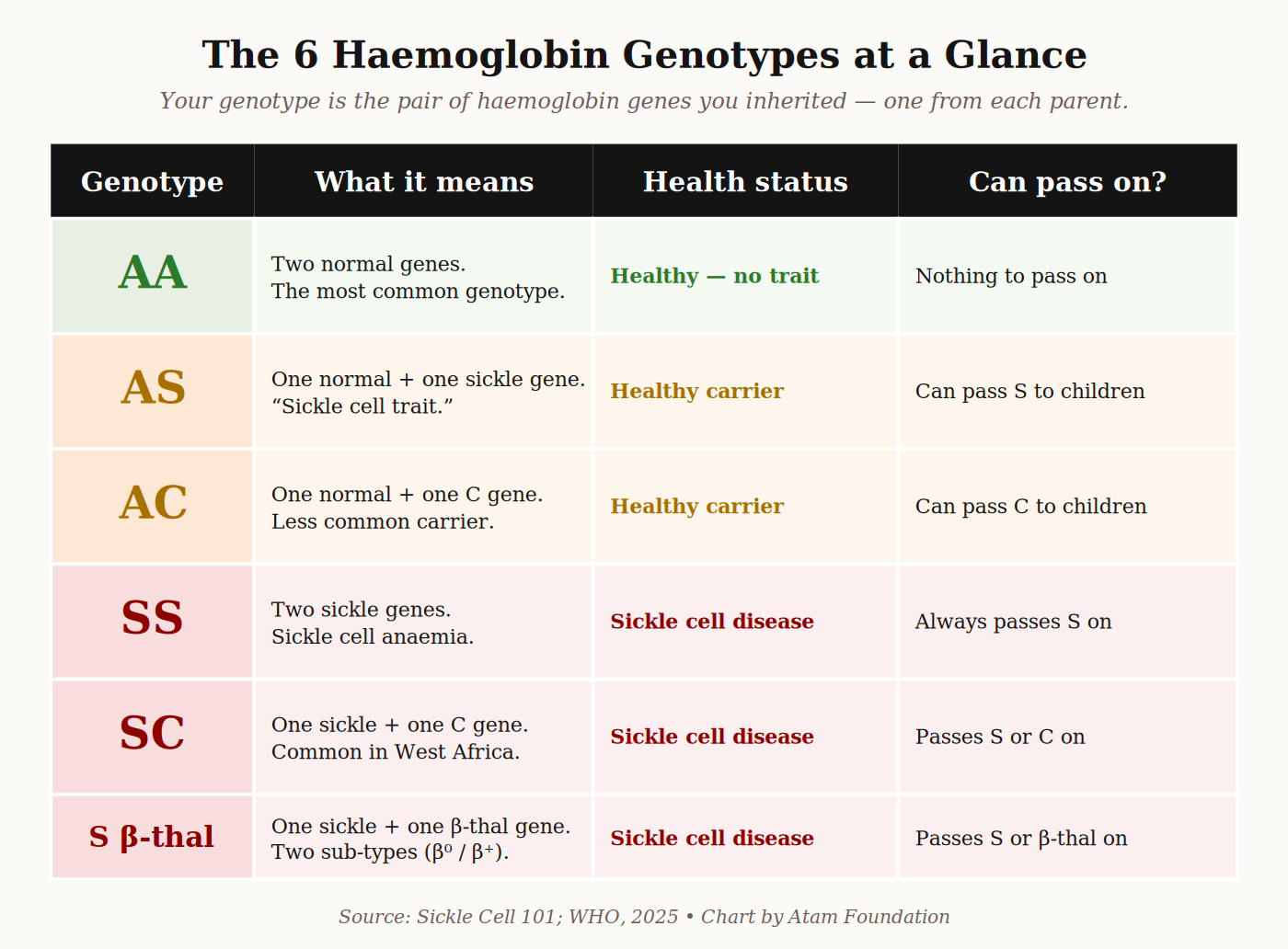
Other forms include SC disease (one sickle gene plus one haemoglobin C gene) and S-beta thalassaemia. We explain all four types in our article on the types of sickle cell disease.
Unlike carriers, people with SCD experience a range of serious and often lifelong symptoms:
- Painful crises (vaso-occlusive episodes) — caused by sickle-shaped cells blocking blood vessels
- Chronic anaemia — sickle cells die much faster than normal red blood cells
- Increased infection risk — the spleen is often damaged early in life
- Organ damage — kidneys, lungs, eyes and bones can all be affected over time
- Stroke risk — children with SCD are particularly vulnerable to stroke
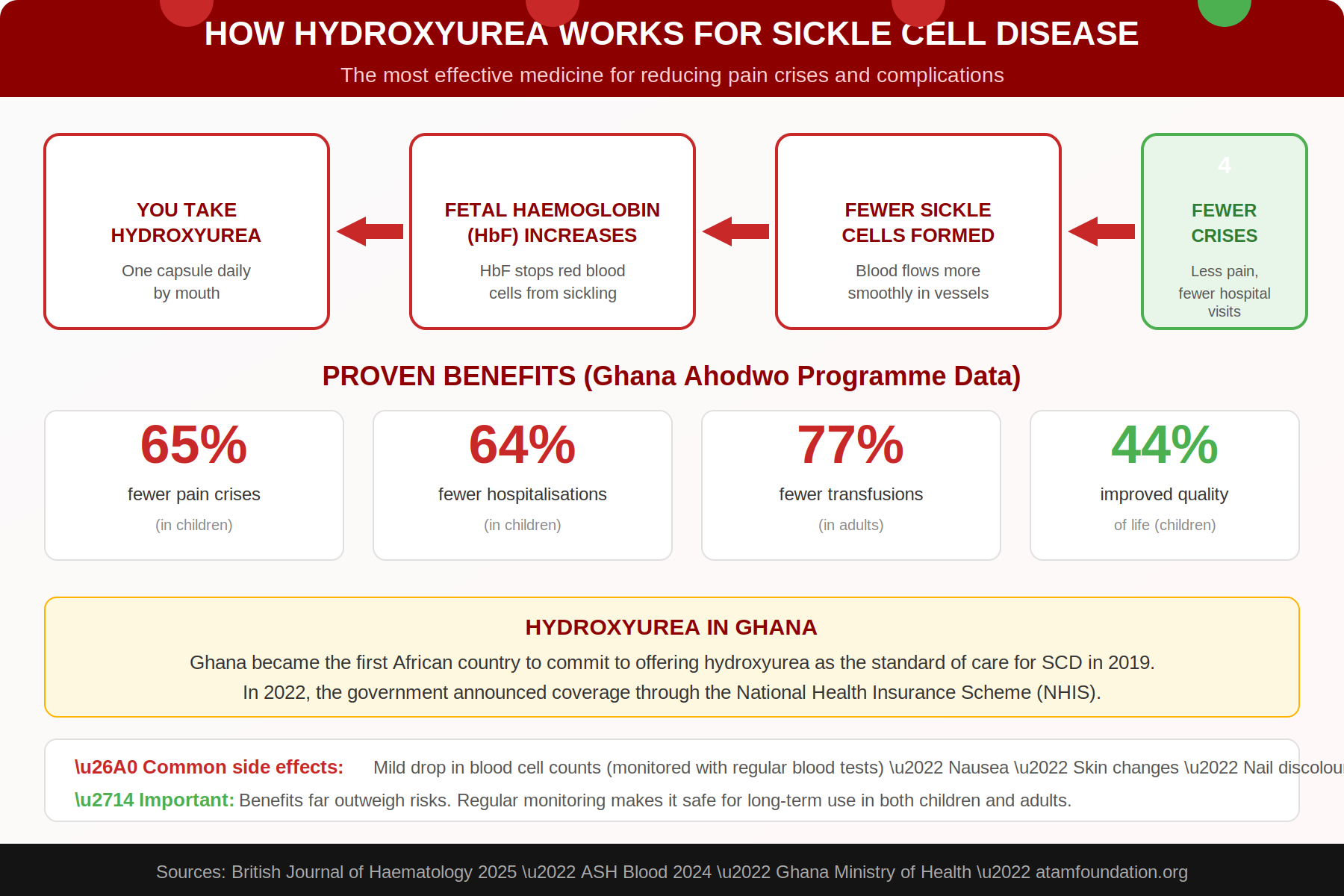
With proper care, including hydroxyurea treatment, regular check-ups, and early intervention for complications, people with SCD can live into their 50s, 60s, and beyond.
But access to care remains the determining factor, especially in sub-Saharan Africa, where the majority of affected individuals live.
The Key Differences at a Glance
| Feature | Sickle Cell Carrier (AS) | Sickle Cell Disease (SS) |
| Genes inherited | One A gene + one S gene | Two S genes (or S + C / S + beta-thal) |
| Symptoms | Usually none | Pain crises, anaemia, organ damage |
| Treatment needed | No regular treatment | Lifelong medical management |
| Life expectancy | Normal | Reduced without proper care |
| Can pass gene to children | Yes — 50% chance per child | Yes — 100% pass one S gene |
| Prevalence in Ghana | 20–30% of the population | ~2% of newborns (~15,000/year) |
| Diagnosed by | Haemoglobin electrophoresis | Haemoglobin electrophoresis |
Why Every Ghanaian Should Know Their Genotype
Ghana has one of the highest sickle cell trait prevalence rates in the world. When two carriers (both AS) have children together, each pregnancy carries a 25 percent chance of producing a child with sickle cell disease (SS). This is not a small risk; it is a one-in-four chance, every single time.
The only way to know your carrier status is through a proper haemoglobin electrophoresis test, not a basic sickling test, which can give incomplete results. We explain the difference between these tests in our genotype guide.
Important: A “sickling test” only tells you whether sickle haemoglobin is present. It cannot distinguish between AS (carrier) and SS (disease). Always request the full haemoglobin electrophoresis.
What If Both Partners Are Carriers?
If you and your partner both carry the sickle cell trait, you are not alone and you are not without options.
Our compatibility chart provides compassionate, non-judgmental guidance for couples in this situation, including information about genetic counselling, prenatal diagnosis, and preimplantation genetic diagnosis (PGD) where available in Ghana.
The Atam Foundation believes that knowledge empowers choice. We will never tell a couple what decision to make, but we will make sure they have the information to make it wisely.
Frequently Asked Questions
Can sickle cell trait turn into sickle cell disease?
No. Sickle cell trait (AS genotype) will never develop into sickle cell disease. You are born with your genotype and it does not change over your lifetime. A carrier will always be a carrier.
Should carriers avoid exercise?
No. Carriers can exercise normally. The only recommendation is to stay well hydrated during intense physical activity and to acclimatise gradually when travelling to high altitudes. Inform coaches and trainers of your AS status as a precaution.
Can two carriers have a healthy child?
Yes. When two AS carriers have children, each pregnancy has a 25% chance of SS (disease), a 50% chance of AS (carrier), and a 25% chance of AA (neither carrier nor disease). Genetic counselling can help couples understand and navigate these probabilities.
Where can I get a genotype test in Ghana?
Haemoglobin electrophoresis is available at all major hospitals and many community health centres across Ghana. Ask specifically for electrophoresis, not a sickling test. The Sickle Cell Foundation of Ghana and the Ghana Health Service can direct you to testing locations in your region.